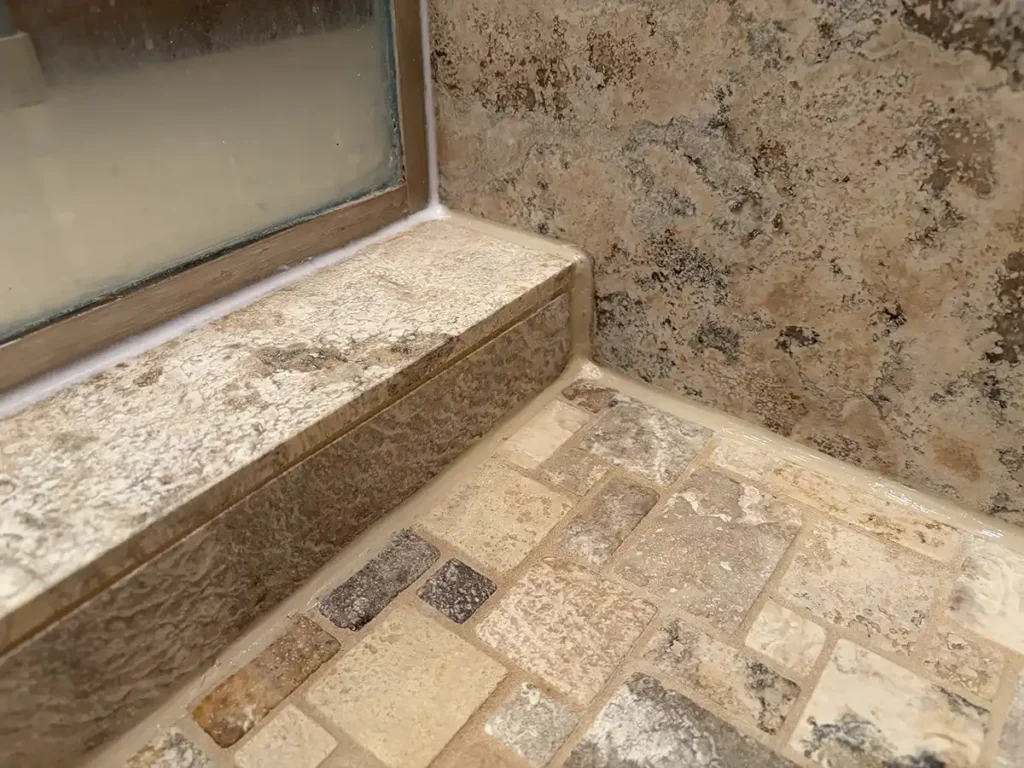
Natural stone can last for decades, but keeping it looking its best isn’t as simple as occasionally cleaning it. When marble, travertine, limestone or other natural stone starts looking dull, stained, scratched or uneven, homeowners often aren’t sure what it actually needs.
Does it need a deep cleaning? Honing? Polishing? Sealing?
The answer depends on what has changed about the surface. Here’s how to tell the difference.
When Natural Stone Needs Professional Cleaning
If the stone still has the finish you remember but looks dirty, dingy or discolored, professional cleaning may be all it needs.
Signs that cleaning should be the first step include:
- Dirt or discoloration in the pores of the stone
- Darkened grout lines
- Soap residue on shower walls or floors
- Hard-water buildup around faucets and shower fixtures
- Stone that looks noticeably better when wet
- Traffic areas that appear dirtier than the surrounding floor
This is especially common in Scottsdale-area bathrooms and showers, where Arizona’s hard water can leave mineral deposits on both stone and grout.
A professional stone cleaning can remove buildup that ordinary household cleaning products leave behind without using harsh products that may damage the stone.
When Natural Stone Needs Honing
Honing is different from cleaning. Instead of removing material sitting on the stone, honing addresses damage or wear in the surface itself.
Your stone may need honing if you see:
- Light scratches
- Etch marks
- Dull spots that remain after cleaning
- Uneven areas of shine
- Wear patterns in high-traffic areas
- A generally tired or hazy appearance
Etching is particularly common with marble, limestone and travertine. Acidic substances such as citrus, vinegar and some bathroom cleaners can chemically react with the stone and leave a dull mark.
If the dull spot is actually etched into the stone, no amount of cleaning will remove it. The surface usually needs to be honed to restore an even finish.
When Natural Stone Needs Polishing
Polishing restores the shine and clarity of stone that was originally intended to have a polished finish.
If your marble or other polished stone once had a reflective appearance but now looks flat or cloudy, polishing may be the missing step.
Polishing is often performed after honing. Honing corrects scratches, etching and surface imperfections; polishing then brings the stone back to the desired level of shine.
Not every natural stone surface should be highly polished, however. Some floors and installations were intentionally given a matte or honed finish. The goal should be to restore the appropriate finish for your particular stone, not simply make everything shiny.
When Natural Stone Needs Sealing
Sealing serves a completely different purpose. A penetrating stone sealer helps reduce the amount of moisture, oils and other substances that porous stone can absorb.
Sealing may be appropriate when:
- Water quickly darkens the stone
- The stone absorbs spills easily
- An older sealer is no longer providing adequate protection
- The stone has recently been professionally cleaned or restored
- Grout is becoming increasingly difficult to keep clean
One important misconception is that sealing makes natural stone maintenance-free. It doesn’t. A sealer gives you additional protection and more time to clean up spills, but the stone still needs proper care.
Sometimes Your Stone Needs More Than One Service
Cleaning, honing, polishing and sealing aren’t competing treatments. They’re different steps used to solve different problems.
For example, a worn travertine floor might need to be professionally cleaned first, honed to correct scratches and etching, polished or finished to the desired appearance, and then sealed to help protect the restored surface.
That’s why simply applying another coat of sealer to dull or damaged stone rarely solves the underlying problem. Sealer protects stone; it doesn’t repair it.
Not Sure What Your Natural Stone Needs?
You don’t need to diagnose it yourself.
The Grout Nurse can examine your marble, travertine, limestone or other natural stone and determine whether you’re dealing with surface buildup, staining, etching, scratches, wear or a loss of protection.
In many cases, natural stone that homeowners assume needs to be replaced can be professionally restored instead.
Before replacing a tired-looking stone floor, shower or countertop, let us take a look. Contact The Grout Nurse to discuss your natural stone and the best way to bring it back to life.