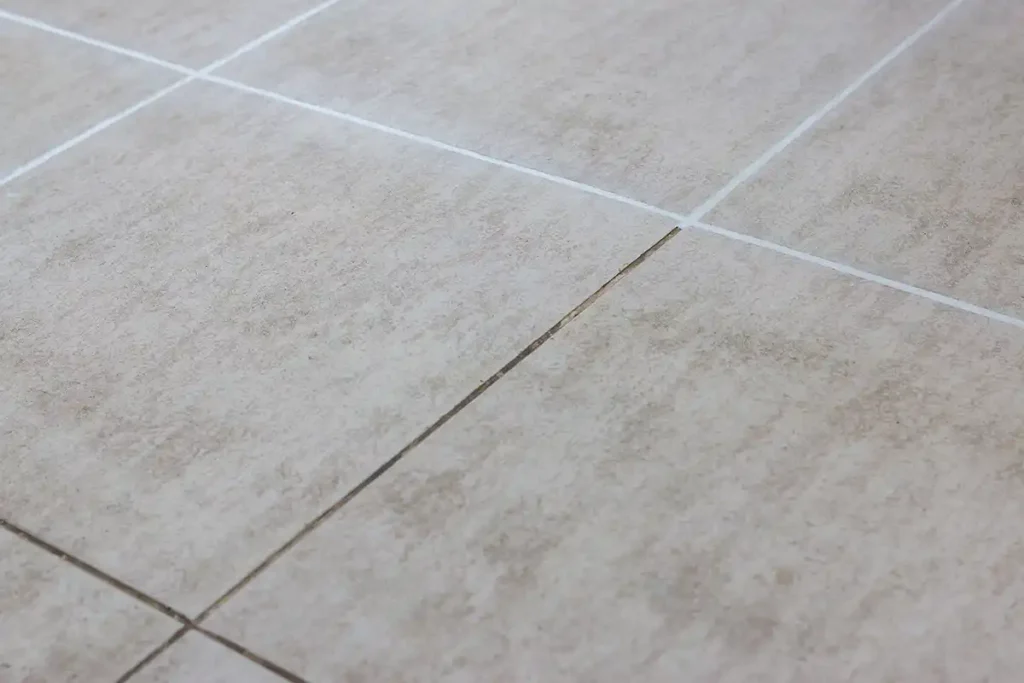
You mop the floor. The tile is clean. You mop it again. Somehow, the entire floor still looks dingy.
Before you blame the tile, take a closer look at the lines between it.
Dirty grout can make an otherwise clean tile floor look dirty. Because grout lines run throughout the entire floor, even relatively minor discoloration can change the appearance of the whole room.
The good news is that your tile may not need replacing, refinishing or another round of household cleaners. The real problem may simply be the grout.
Why Dirty Grout Changes the Appearance of the Entire Floor
When a tile floor is new, the grout lines are generally consistent in color. That creates clean, distinct lines between the individual tiles.
As grout becomes dirty, those lines begin to darken. High-traffic areas may become noticeably darker than areas along walls or underneath furniture. The contrast between the tile and grout changes, and suddenly the entire floor can look old and poorly maintained.
Because there are grout lines every few inches across the floor, a relatively small amount of discoloration is repeated hundreds or even thousands of times.
Your eyes see the entire surface, not just the individual tiles. That’s why dirty grout can make perfectly good tile look much worse than it actually is.
Why Does Grout Get So Much Dirtier Than Tile?
Most ceramic and porcelain tile has a relatively smooth, nonporous surface. Dirt and spills tend to remain on top where they can be removed during routine cleaning.
Grout is different.
Traditional cement-based grout is porous and has a much more textured surface. Dirt, oils, cleaning residue and other contaminants can become trapped in that surface instead of simply wiping away.
Everyday foot traffic makes the problem worse. Dirt brought into the home on shoes and feet gets worked into the grout lines. In kitchens, cooking residue and spills can contribute to discoloration. Bathrooms add moisture, soap and personal-care products to the mix.
Over time, grout that originally matched throughout the room can develop dramatically different shades.
Mopping Doesn’t Always Clean Grout Very Well
Here’s where things get frustrating.
You can have a perfectly clean mop and use a perfectly good floor cleaner and still have dirty grout.
A mop is excellent at cleaning the broad surface of tile. It isn’t nearly as effective at reaching into the textured surface of grout.
Worse, as mop water becomes dirty, some of that contaminated water can settle into the grout lines. The water eventually evaporates, but some of the dirt and cleaning residue can remain behind.
After years of routine mopping, the tile itself may be reasonably clean while the grout has become progressively darker.
Look Under a Rug or Piece of Furniture
If you want to see how much your grout has changed, there is an easy test.
Look at the grout underneath a piece of furniture, inside a closet or in another area that receives almost no foot traffic. Then compare it with the grout running through the middle of the room.
Homeowners are often surprised by the difference.
What they thought was the original grout color may actually be years of accumulated soil and discoloration.
More Scrubbing Isn’t Always the Answer
Once homeowners realize the grout is the problem, the next instinct is usually to grab a brush and start scrubbing.
That might improve a small area, but cleaning hundreds of feet of grout lines by hand is another matter entirely.
It can take hours of work, and inconsistent scrubbing can leave some areas looking cleaner than others. Household cleaners can also leave residue behind, while overly aggressive chemicals may damage grout, natural stone or surrounding surfaces.
If the entire floor has become discolored, professional tile and grout cleaning is usually a much more practical solution.
Professional Grout Cleaning Can Transform an Entire Room
One of the most satisfying things about professional grout cleaning is seeing just how much the appearance of the floor can change without replacing a single tile.
Removing deeply embedded dirt and buildup from the grout restores the contrast between the tile and grout lines. Suddenly, the color and pattern of the tile become the focus again.
In many cases, homeowners who thought they had an old, worn-out tile floor discover that the tile itself was never the problem.
What If the Grout Still Doesn’t Look Consistent?
Sometimes grout has become permanently stained or discolored after years of use. Previous cleaning products, spills, repairs and differences in the original installation can also leave grout with inconsistent coloring.
That’s where grout color sealing can make a dramatic difference.
After the grout is professionally cleaned, color sealing can create a consistent grout color throughout the floor while also helping protect the porous grout from future staining.
It can completely change the appearance of an older tile installation without the expense and disruption of replacing the floor.
Before You Replace Your Tile, Let Grout Nurse Look at the Grout
If your tile floor always looks dirty no matter how often you clean it, don’t assume the tile itself is worn out.
Dirty grout can make an otherwise clean tile floor look dirty, particularly when years of discoloration have developed throughout the most heavily traveled areas of your home.
At Grout Nurse, we professionally clean tile and grout throughout Scottsdale, Paradise Valley, Fountain Hills and surrounding Arizona communities. We can evaluate your floor, professionally clean the tile and grout, and recommend sealing or grout color sealing when appropriate.
Before you start thinking about replacing a perfectly good tile floor, give Grout Nurse a call. You may be surprised how much better the entire room looks when the grout looks clean again.