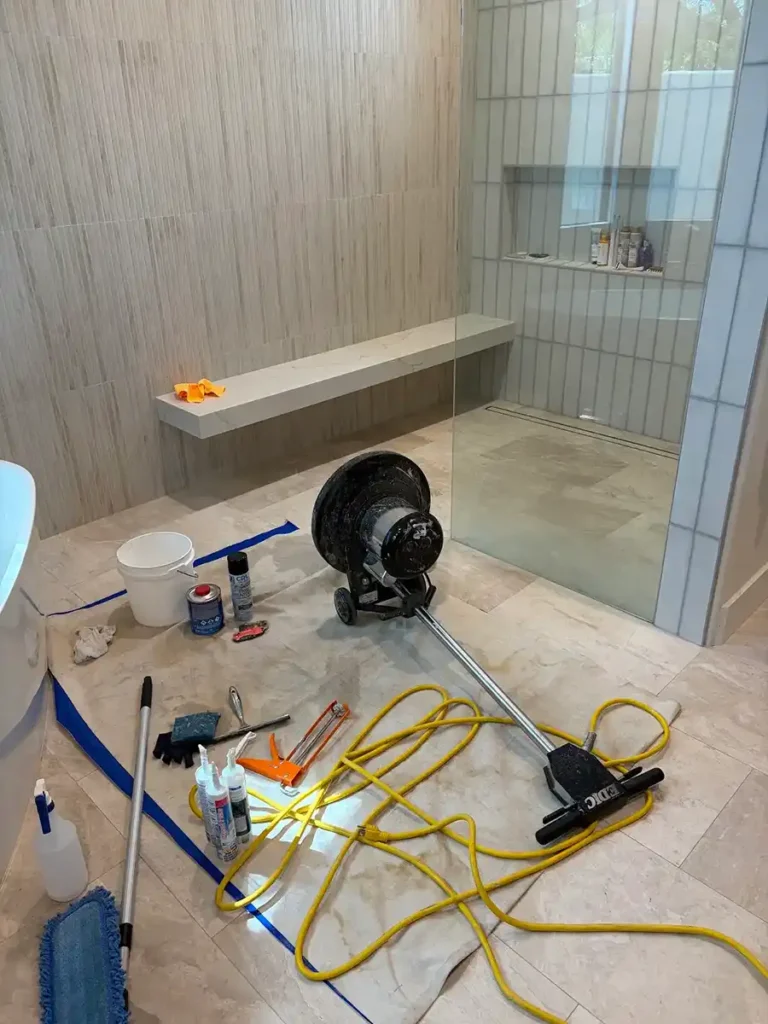
Vinegar is often recommended as a natural household cleaner. It is inexpensive, readily available and works surprisingly well on some surfaces.
But vinegar and natural stone can be a very bad combination.
We recently restored a limestone shower floor after the homeowner attempted to clean it himself using vinegar. Instead of getting the floor cleaner, the vinegar reacted with the limestone and etched the surface, leaving the stone dull, uneven and damaged.
Fortunately, the damage was repairable.
Why Does Vinegar Damage Limestone?
Limestone is a calcium-based natural stone. Vinegar is acidic. When the two come into contact, the acid can chemically react with the minerals in the stone.
This reaction is called etching. Rather than simply leaving a stain or residue on top of the limestone, the acid actually changes the surface of the stone.
That distinction is important because once limestone has been etched, additional cleaning will not fix it. The damaged surface needs to be professionally restored.
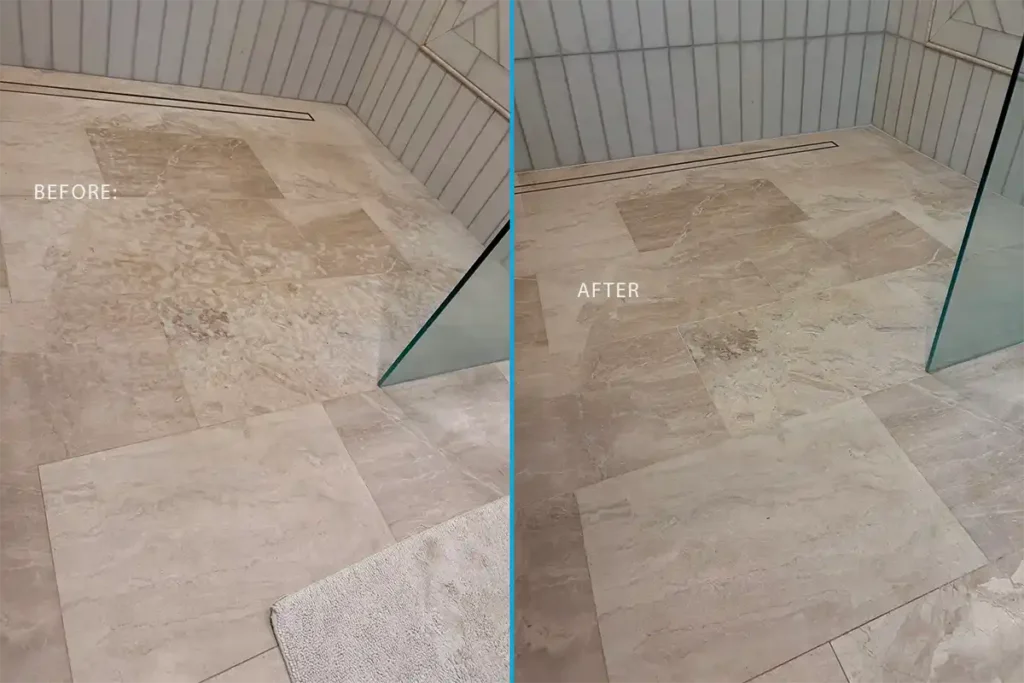
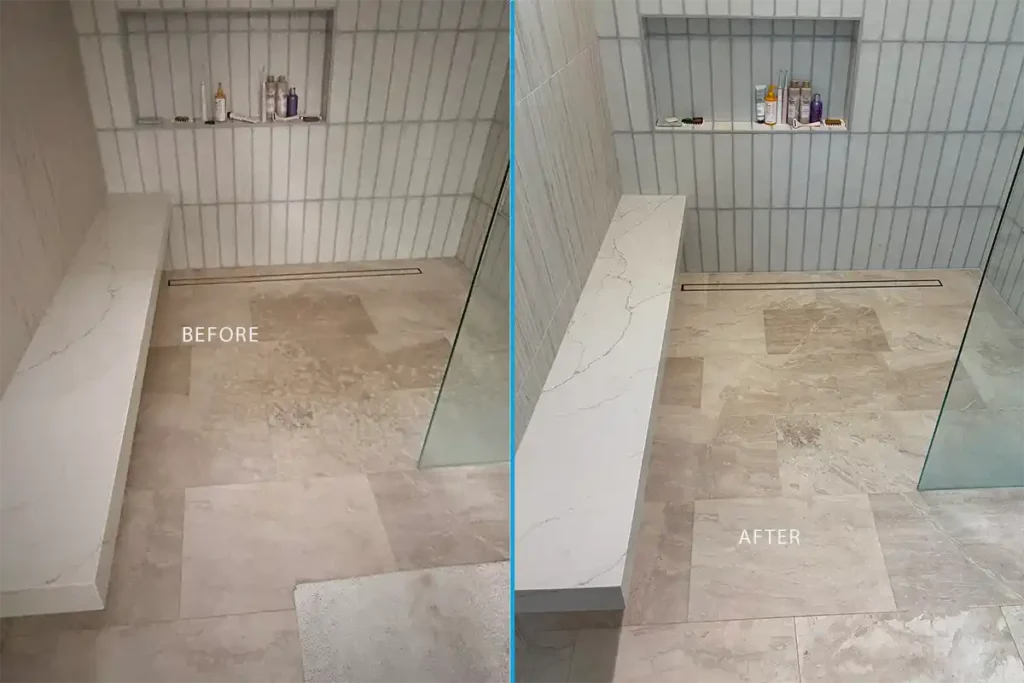
Note in the before picture how the vinegar left scarring marks in the natural stone. On the right, after we finished it looks like new again.
What Happened to This Limestone Shower?
The homeowner was trying to clean the limestone shower floor and did some research before tackling the project himself. Unfortunately, vinegar was used during the process.
The result was an etched limestone surface that still wasn’t properly clean.
By the time we arrived, this wasn’t simply a shower-cleaning job. The stone itself needed to be restored.
Honing the Limestone Back to an Even Finish
We began by honing the limestone. Honing mechanically removes a very small amount of the damaged surface, allowing us to work past the etching and create a consistent finish across the shower floor.
Once the surface was properly honed and leveled, we gave the limestone a low polish to bring it back to its original appearance.
This is one of the major advantages of genuine natural stone. Damage that might require replacement with another flooring material can often be corrected by an experienced stone restoration professional.
Properly Deep Cleaning the Stone and Grout
Restoring the finish was only part of the job. The limestone and grout also needed a genuine deep cleaning.
Instead of using an acidic product, we cleaned the shower with an appropriate alkaline degreaser. This allowed us to remove accumulated contaminants without causing additional acid damage to the limestone.
After cleaning and restoration were complete, we applied a clear sealer to both the natural stone and grout to help protect the surfaces.
We Also Found a Water Leak
During the project, we discovered another problem around the perimeter of the shower.
Water was getting through areas where the floor and surrounding surfaces met. The most visible problem was where the glass and tile came together. Cracked grout in this area was allowing moisture to escape outside the shower.
That moisture was also contributing to the clear silicone turning black.
We removed the failed clear silicone where necessary and recaulked the affected areas. Along the floor perimeter, we used 100% silicone matched to the grout color to create a flexible, water-resistant joint while maintaining the finished appearance of the shower.
Can an Etched Limestone Shower Floor Be Restored?
In many cases, yes.
Acid etching can look permanent because ordinary cleaning products won’t remove it. But if the damage is limited to the surface, professional honing and polishing can often restore limestone, travertine, marble and other natural stones without replacing them.
The key is recognizing the difference between a surface that is dirty and one that has actually been chemically damaged.
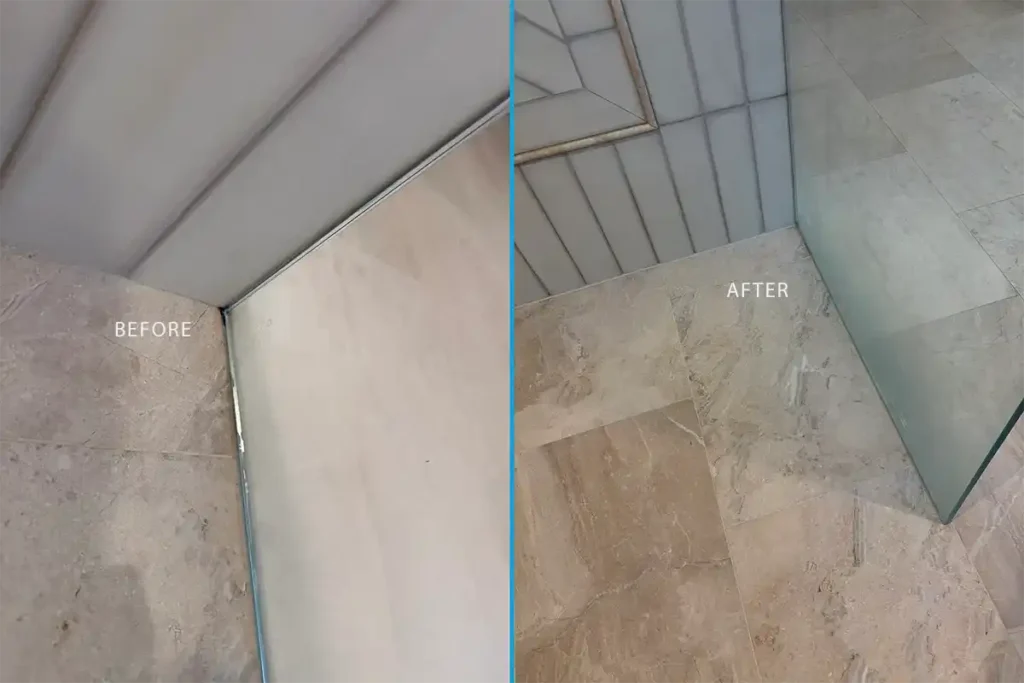
Cracked grout edge and moldy silicone at the glass corner. After, new caulking of the grout edge at the wall, and recaulking the clear silicone at the glass corner. Note the black and moldy from water going through the grout crack and sitting there is now gone!
Don’t Use Vinegar on Natural Stone
The lesson from this project is simple: don’t assume that a “natural” cleaner is safe for natural stone.
Vinegar, lemon juice and other acidic cleaners can damage limestone and many other calcium-based stones. Even some commercially available bathroom cleaners can be too acidic for natural stone.
If your limestone, travertine or marble has become dull, stained, etched or difficult to clean, adding stronger chemicals can make the problem considerably worse.
Grout Nurse provides professional natural stone cleaning, honing, polishing and sealing in Scottsdale and surrounding Arizona communities. If you’re not sure whether your stone needs cleaning or restoration, we can determine what happened to the surface and recommend the appropriate treatment before more damage is done.